Understands, Says, Uses, Sentences: A Practical Way to Organize Baby Words
A practical guide to organizing baby words by understanding, speaking, purposeful use, and combined expressions without clinical scoring.
Try BabyTracker: Words & Food on iPhone
Use simple stages, categories, scenes, and notes to keep early language observations organized.
A word can be part of a child's day before it is spoken clearly. A baby may look toward the door when hearing "outside," point to water, attempt a sound, use the word independently, and later combine it with another word. A single yes-or-no word list loses those differences.
Using simple stages such as understands, says, uses, and sentences can make a family vocabulary journal easier to review. These labels describe an observation. They are not clinical milestones, a language score, or a substitute for professional assessment.
BabyTracker: Words & Food (formerly Baby Word Radar) uses these stages as practical journal labels, not as a clinical scale.
Understands
Choose "understands" when the child's response suggests the word has meaning in context. For example, a familiar request may lead to an action, or the child may look toward the named person or object.
Context matters. One response is not proof of a permanent skill, and parents do not need to test a word repeatedly. The label simply preserves what you noticed in that moment.
An optional note can explain the scene: "looked for shoes when we said outside" is more useful later than a bare checkbox.
Says
Choose "says" when you hear a recognizable attempt at the word or expression. Early pronunciation can be personal to the family. The record can use the adult word as the title and keep the child's version in the note.
Consistency is helpful, but perfection is not required. A first-words journal is allowed to capture emerging speech without deciding whether it meets a formal definition.
Dates help preserve the sequence. If the word changes later, edit the stage or add a new note rather than rewriting the earlier memory.
Uses
"Uses" can describe a word that appears independently and with a clear purpose in daily life. A child may use "open" to request help, "more" during a meal, or a family name to get someone's attention.
Adding the scene makes this stage especially useful. The same expression may first appear during one routine and later transfer to another. Categories such as actions, needs, people, feelings, or social words make the library easier to browse.
The goal is not to collect a larger number. It is to remember how language connects with everyday situations.
Sentences and Combined Expressions
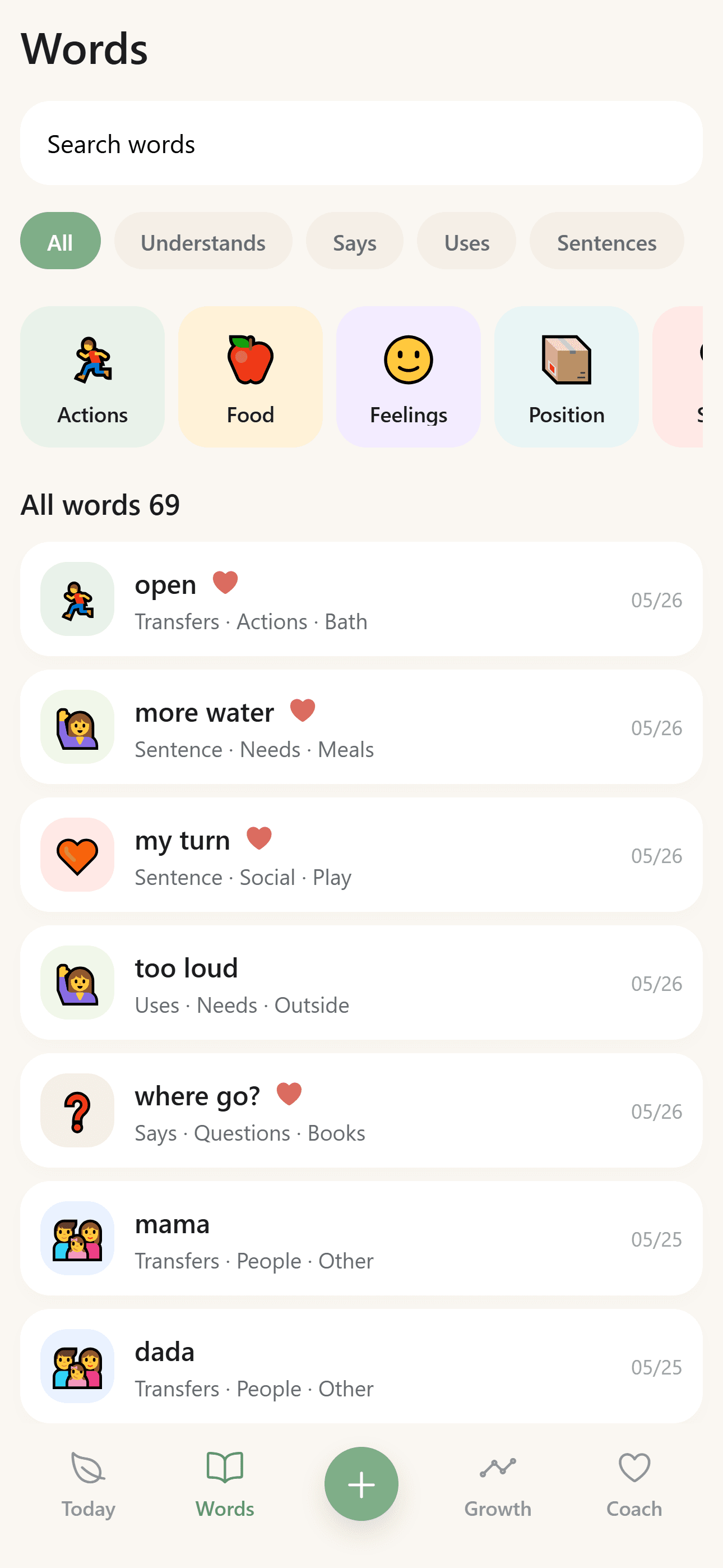
Short combinations such as "more water," "my turn," or "where go?" can be kept as expressions rather than split into separate word records. This preserves the phrase that mattered in the moment.
The "sentences" label is a practical organizer inside the app. It should not be read as a grammar judgment or developmental certification. Families may use the label for meaningful combinations that they want to find again.
Keep the System Consistent
A stage system works best when you apply it in roughly the same way over time. A few habits help:
- Record the clearest stage you actually observed.
- Add a short note when the context changes the meaning.
- Update entries when a word begins to be used differently.
- Avoid promoting a stage only to make the chart look fuller.
- Treat uncertain entries as memories, not evidence for a diagnosis.
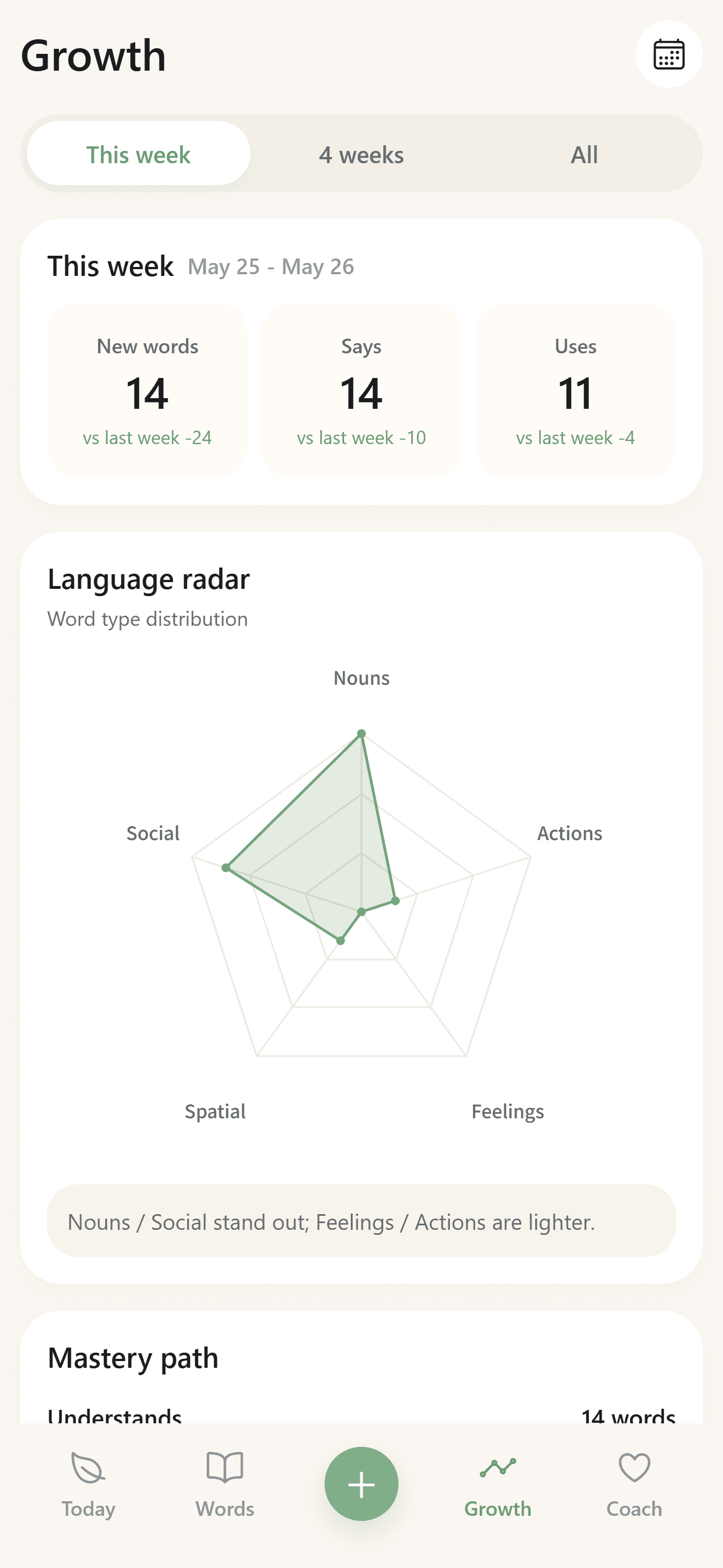
BabyTracker lets parents search and filter these stages, then view summaries based on their own records. The summaries are most useful when the underlying labels remain simple and honest.
What the Stages Can and Cannot Tell You
The stages can help a parent remember examples, notice the range of recorded expressions, and prepare concrete observations for a conversation.
They cannot determine whether development is typical, identify a delay, or recommend treatment. If you are concerned about speech, language, hearing, or development, consult a pediatrician or qualified professional.
The Short Version
Use "understands" for meaning shown in context, "says" for a recognizable spoken attempt, "uses" for independent purposeful use, and "sentences" for expressions you want to keep together.
BabyTracker turns those labels into a searchable local record. The value comes from clearer memories and patterns in your own journal, not from scoring or comparing a child.