How AI Can Help You Review a Baby's Word Journal
Learn how AI can summarize a baby word journal, surface recent vocabulary patterns, and stay grounded in parent-confirmed records.
Try BabyTracker: Words & Food on iPhone
Use Words AI to ask focused questions about the language records you have already reviewed and confirmed.
A baby word journal becomes more useful as it grows, but a longer list also becomes harder to review. Parents may remember that several new expressions appeared recently without recalling which scenes, categories, or stages changed most. AI can help organize that review, provided it stays grounded in the records a parent has actually confirmed.
The useful role of AI is not to score a child or guess a developmental outcome. It is to summarize recorded facts, help a parent ask a more focused question, and point back to examples that can be checked.
BabyTracker's Words AI is designed around that narrower job. It works with the relevant language-record summary and questions selected by the parent, while the original word journal remains the source of truth.
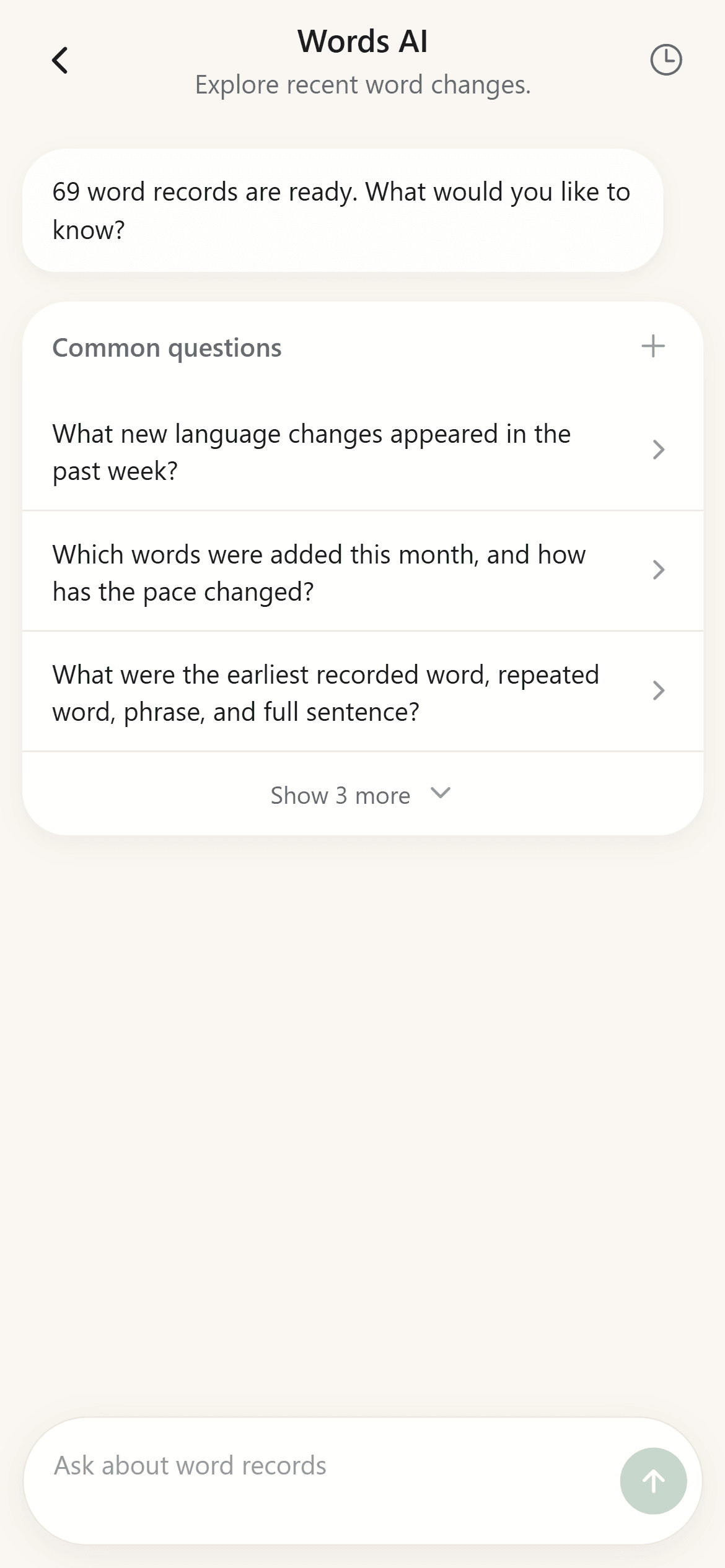
Start With Records That Have Enough Context
AI cannot recover context that was never recorded. A word-only list may show what appeared, but it cannot reliably explain where the expression happened or how it was used.
A stronger entry includes a few practical fields:
- The word or expression.
- The date it was first recorded or last updated.
- A descriptive stage such as understands, says, uses, or sentences.
- A category such as actions, people, food, feelings, or questions.
- The everyday scene where it appeared.
- An optional note when the situation changes the meaning.
These fields do not turn the journal into a clinical assessment. They simply give a later review more evidence to work with.
Ask One Concrete Question at a Time
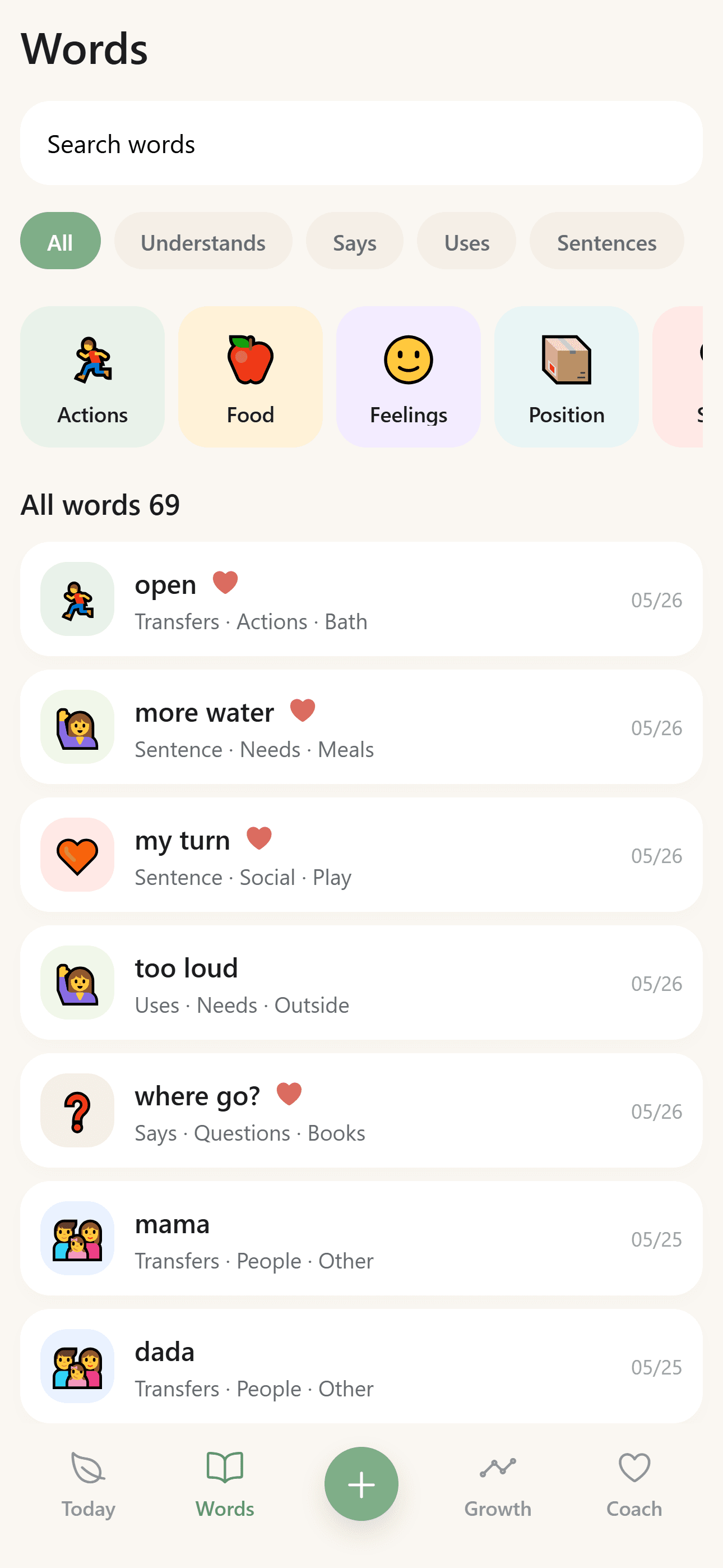
"Analyze my baby's language" is too broad to produce a dependable answer. A focused question gives AI a clearer boundary and gives the parent a clearer way to check the result.
Useful questions include:
- What new language changes appeared in the past week?
- Which words were added this month?
- In which scenes were recent expressions recorded most often?
- Which categories appear most in the current journal?
- What are the earliest recorded word, repeated expression, phrase, and sentence?
Each question should be answered from the journal, not from a generic milestone chart. A good response names the date range and points to examples instead of making a broad claim about ability.
Separate Recorded Facts From Interpretation
Suppose a summary says that recent records contain more action words than feeling words. The recorded category count is a fact within the journal. The reason for that pattern is not.
It may reflect the child's current expressions, the routines a parent noticed, the categories used when saving records, or simply what happened to be entered that week. AI can suggest these possibilities, but it should not present one explanation as certain.
A practical review keeps three layers separate:
- **Recorded:** what the entries actually contain.
- **Observed:** a pattern visible across those entries.
- **Possible next step:** an optional idea a parent may try in daily life.
This makes the output easier to trust and easier to correct.
Check the Answer Against the Journal
Before acting on a summary, open the underlying word records. Check whether the examples exist, whether the date window is correct, and whether the stage or scene still matches what happened.
If an answer misses context, edit the source record or ask a narrower follow-up. For example, replace "What should we practice?" with "Which recent action words appeared during bath time, and what is one natural phrase we could model next?"
The parent remains the reviewer. AI does not automatically change a stage, add a word, or save a conclusion into the journal.
Use AI for Reflection, Not Diagnosis
A word journal can help a family remember examples and prepare questions for a professional conversation. It cannot determine whether speech or language development is typical, identify a delay, or recommend treatment.
AI should not turn word counts, categories, or recent changes into a diagnosis. When a parent has concerns about speech, language, hearing, feeding, or development, a pediatrician or qualified professional is the appropriate source of assessment.
The Short Version
AI can make a baby word journal easier to review by summarizing parent-confirmed records, grouping recent changes, and helping parents ask focused questions.
The reliable workflow is simple: record enough context, ask one concrete question, separate facts from interpretation, and check every answer against the original journal. BabyTracker keeps AI in that supporting role so the record remains useful without becoming a score.