How to Find Baby Food Preferences From a Meal Journal
Use confirmed meal records to review favorite dishes, ingredients, preparation patterns, and baby food responses without nutrition claims.
Try BabyTracker: Words & Food on iPhone
Use Food AI to review confirmed meal ratings, ingredients, preparation notes, and recent responses together.
A parent may remember that a baby liked one meal and refused another, but isolated moments are difficult to compare. A meal journal makes those memories easier to revisit by keeping the dish, ingredients, preparation, response, date, photo, and notes together.
After several confirmed records, AI can help organize the journal into questions about preferences. The result should remain an observation about recorded meals, not a nutrition plan or a conclusion about what a baby should eat.
BabyTracker's Food AI uses the relevant confirmed food records to help parents review favorites, repeated ingredients, preparation patterns, and recent responses.
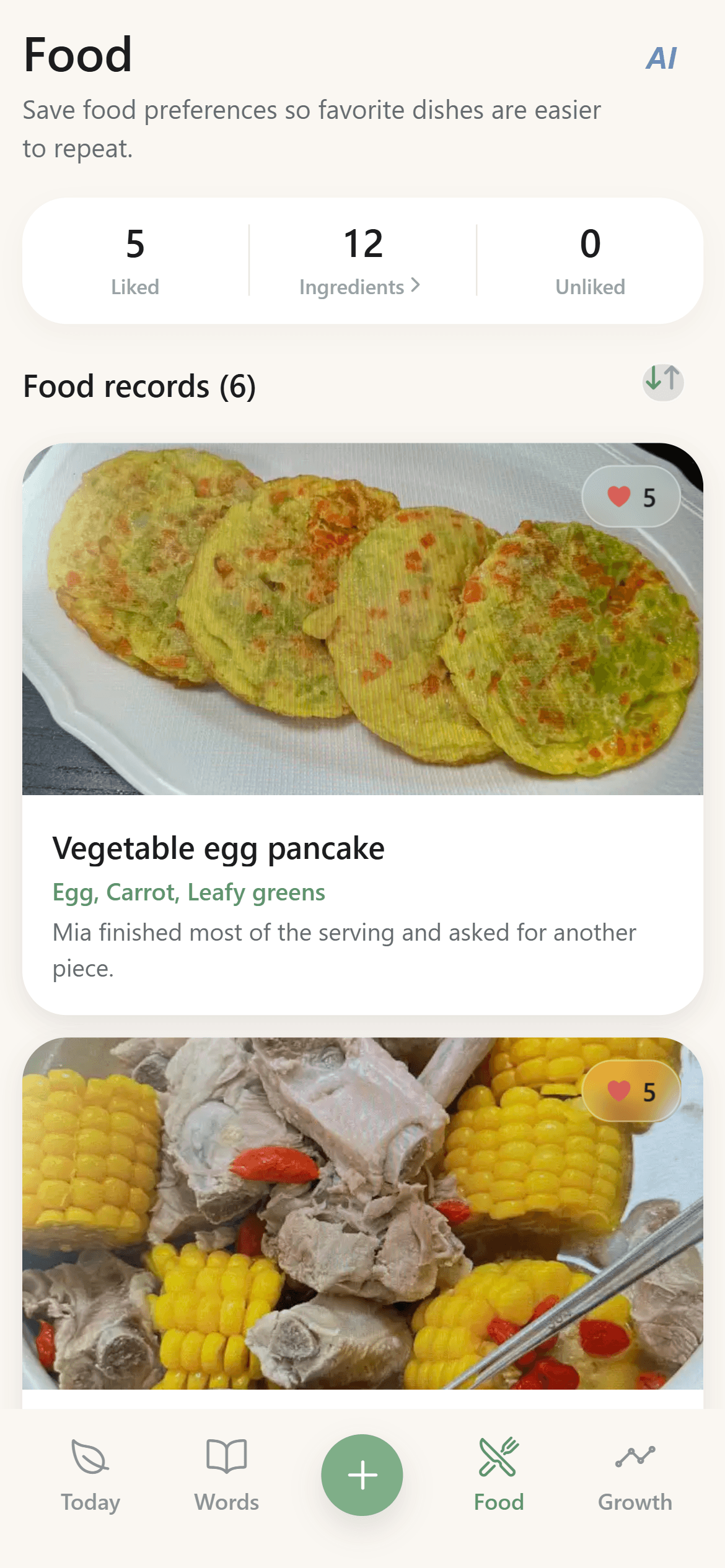
Start With Consistent Response Notes
A simple rating is useful for scanning, but the note beside it often explains more. A low rating may mean the texture was unfamiliar, the baby was not hungry, or only one ingredient was refused. A high rating may reflect a favorite ingredient or simply a familiar routine.
Use a consistent response scale, then add one short observation when context matters. This makes later comparisons less likely to confuse one difficult meal with a stable preference.
Separate Ingredients From Dishes
The same ingredient may appear in several dishes. A baby might respond differently to carrot in a soft pancake, soup, puree, or mixed rice.
When reviewing the journal, ask two different questions:
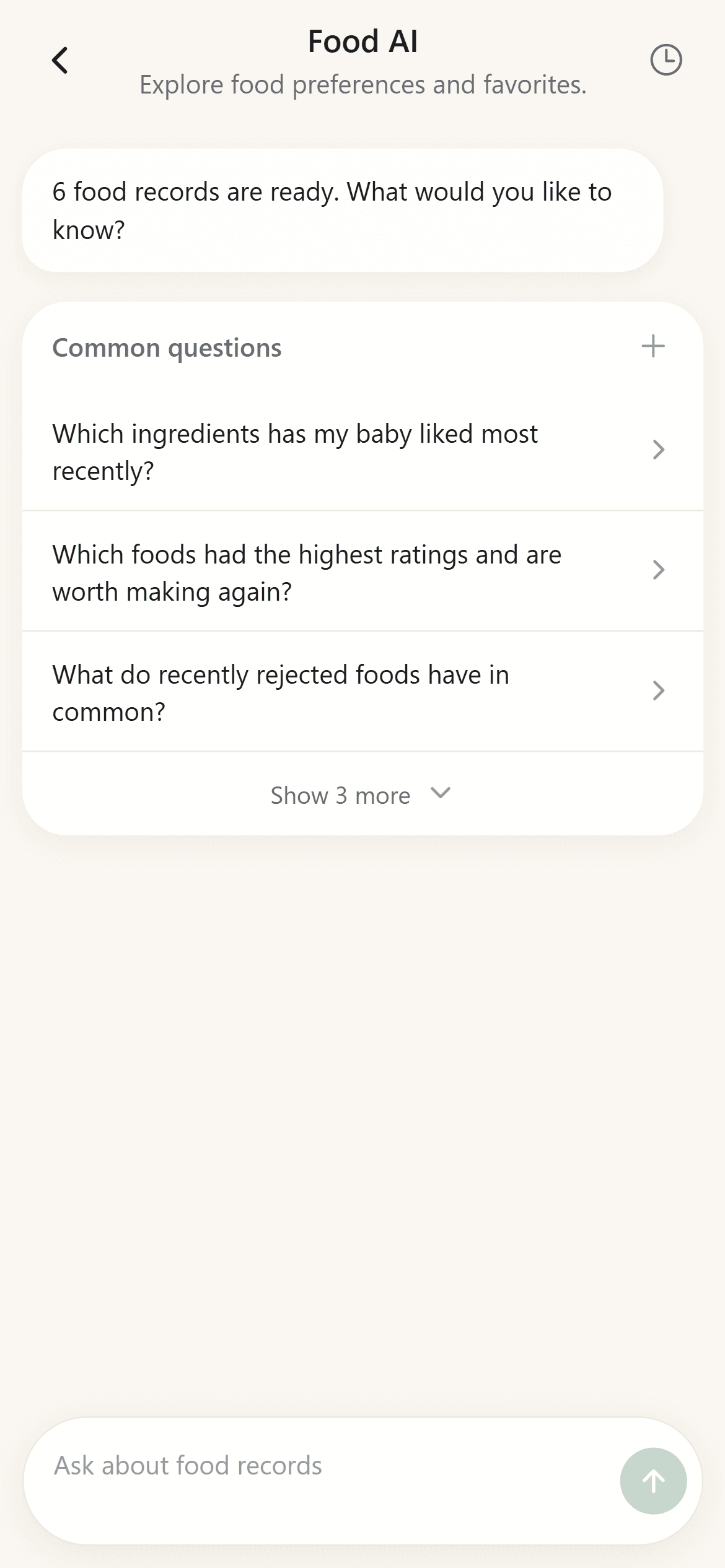
- Which dishes received the highest parent-entered ratings?
- Which ingredients appeared repeatedly in well-received dishes?
The second question can suggest a possible ingredient preference, but it is not proof. Preparation, texture, temperature, seasoning, hunger, and the rest of the meal may all matter.
Look at Preparation Patterns
Food AI can help group records by preparation notes when those notes are present. A family may notice that soft baked dishes were recorded more positively than mixed soups, or that a familiar ingredient was accepted in one texture but not another.
Describe the finding as "more often liked in the recorded meals" rather than "preferred in general." The journal contains a limited sample shaped by what the family cooked and chose to record.
Ask Questions the Records Can Answer
Focused questions produce more useful reviews:
- Which ingredients appeared in the most highly rated recent meals?
- Which dishes are worth making again based on our ratings and notes?
- What do the recently refused foods have in common in this journal?
- Which preparation styles appeared most often among accepted meals?
- Which new ingredients were recorded this month, and how were they rated?
Avoid asking AI to diagnose an allergy, prescribe a diet, decide nutritional adequacy, or recommend a treatment. Those questions go beyond a family meal journal.
Check the Examples Behind the Pattern
If AI says that one ingredient appears in several favorites, open those meal records. Confirm that the ingredient was actually present, that the ratings refer to the whole dish, and that the notes do not contradict the summary.
Also look for missing evidence. If only one rejected dish contains an ingredient, the journal does not support a broad conclusion. If the same ingredient appears in several differently prepared meals, the preparation may be as important as the ingredient.
Turn the Review Into One Practical Choice
A preference review is most helpful when it reduces planning effort. Choose one small action:
- Repeat a well-liked confirmed dish.
- Try a familiar ingredient in one different preparation.
- Add better notes for a food with mixed responses.
- Record the next exposure before deciding whether a pattern exists.
Keep the idea optional and age-appropriate for your family. When feeding, allergy, nutrition, or developmental concerns are involved, use qualified professional guidance.
The Short Version
To find baby food preferences from a meal journal, use consistent ratings and notes, compare dishes separately from ingredients, review preparation patterns, and check every AI summary against the underlying records.
BabyTracker helps parents organize those confirmed observations so favorite meals are easier to repeat and uncertain patterns remain open for further observation.