How to Track Your Baby's First Words on iPhone
A practical iPhone workflow for recording a baby's first words, stages, categories, scenes, and everyday language moments.
Try BabyTracker: Words & Food on iPhone
Record a word or expression, add its stage and scene, and keep the first-words journal on your iPhone.
A baby's first words rarely arrive as a neat list. A word may appear during breakfast, a favorite book, bath time, or a walk outside. It may be understood for weeks before it is said, and it may sound different each time. The useful record is not a perfect transcript. It is a small note made close to the moment.
An iPhone first-words journal can make that easier because the phone is usually nearby. The goal is to capture enough context to remember what happened without turning family life into a data-entry project.
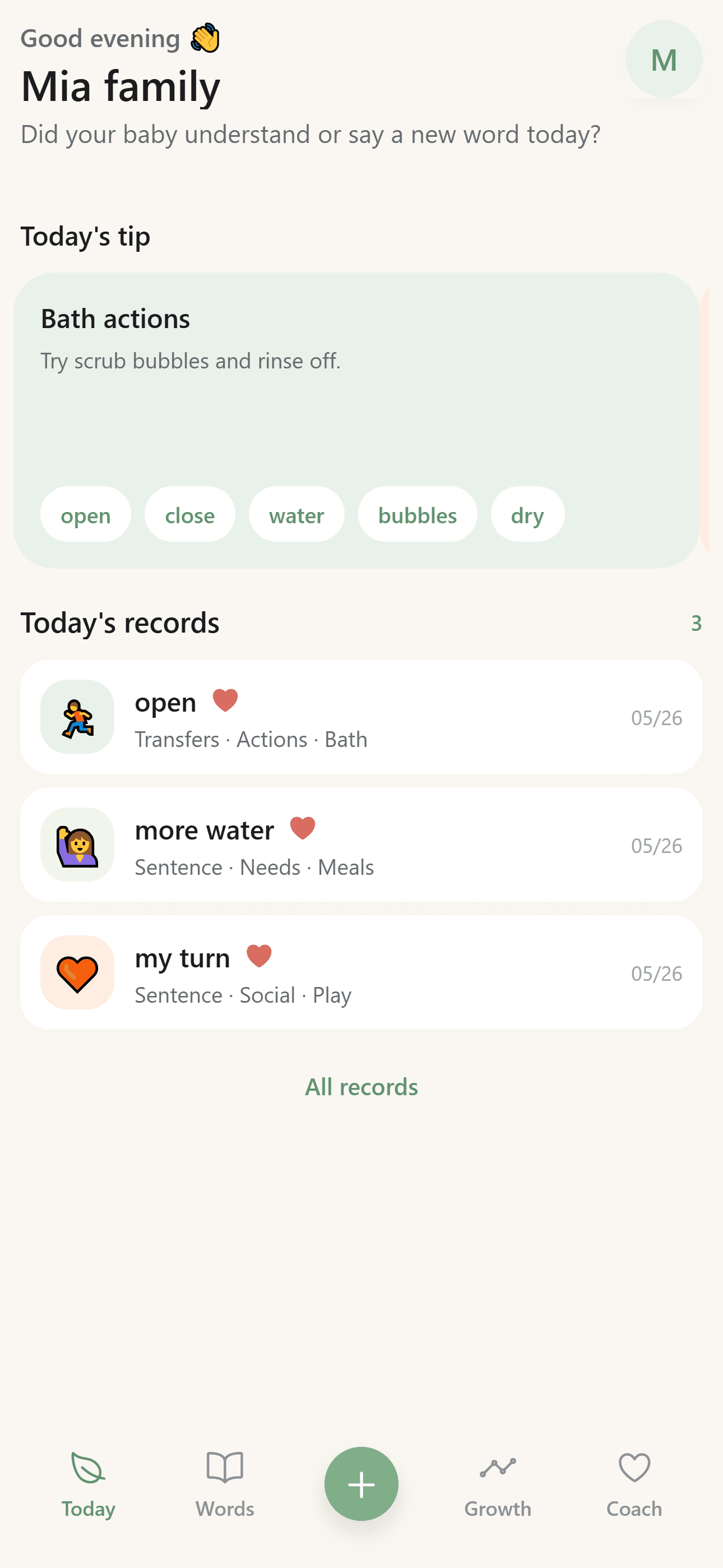
BabyTracker: Words & Food (formerly Baby Word Radar) is designed around that lightweight habit: record a word or expression, choose the stage that best describes it, add a category or scene, and return to the day.
Start with the Words You Notice Naturally
You do not need a prepared vocabulary checklist before you begin. Start with the words and expressions that already stand out in daily life. A name, an action such as "open," a request such as "more water," or a short phrase can all be worth keeping.
Record the version you actually heard. Early expressions do not need to match an adult dictionary form to be meaningful to your family journal. If a short note would help later, add the scene: meal time, books, bath, play, outdoors, or another familiar routine.
This keeps the journal grounded in real moments instead of forcing every entry into a formal assessment.
Separate Understanding from Speaking
Parents often notice that a child responds to a word before saying it. Keeping "understands" and "says" separate makes the record more descriptive.
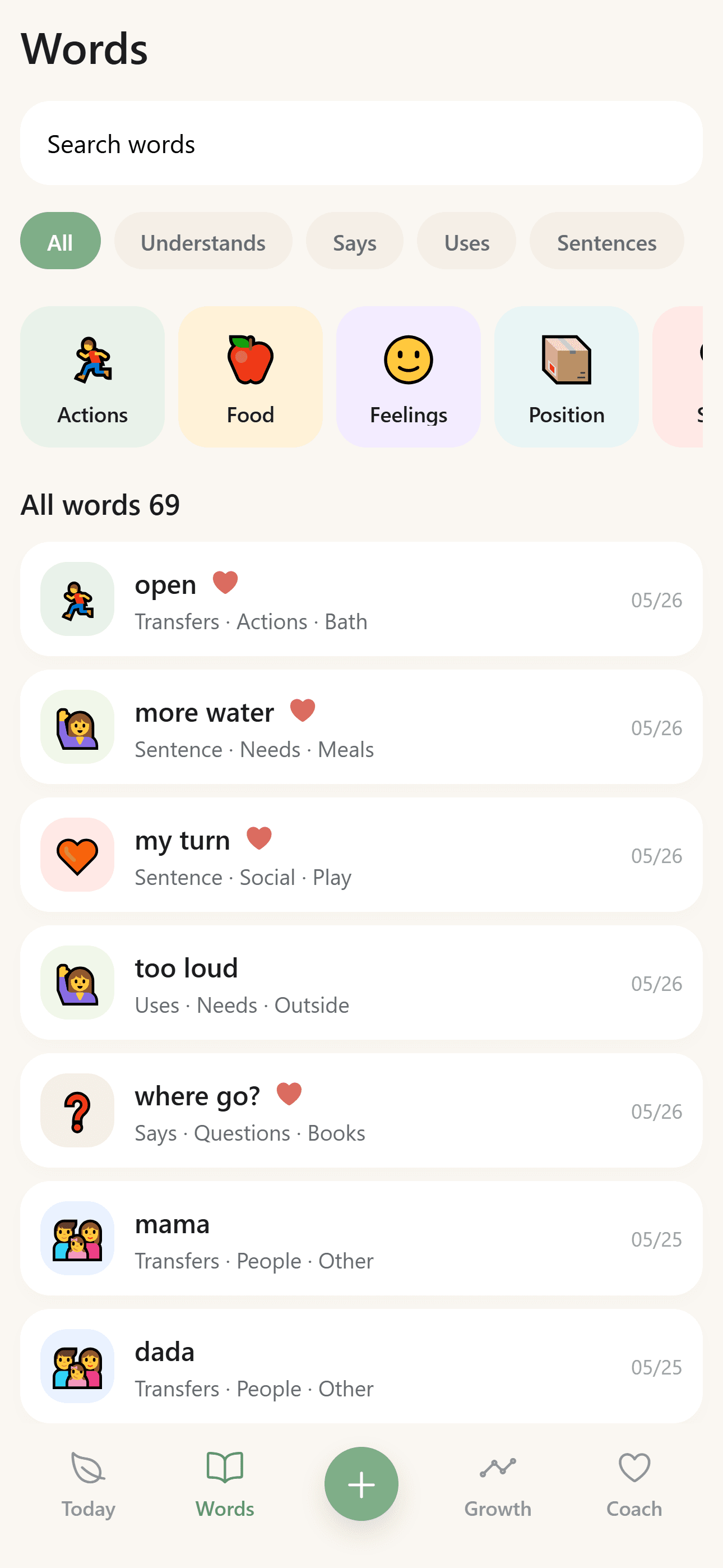
Baby Word Radar also lets you distinguish later use, such as using a word independently or combining it in a sentence. These stages are not a diagnosis or a score. They are labels that help you remember how an expression appeared at that time.
If you are unsure, choose the simplest stage supported by what you observed. You can edit the record later as the word changes.
Add Just Enough Context
A useful word entry can be short:
- The word or expression.
- The stage you observed.
- A category such as actions, food, feelings, people, or questions.
- The everyday scene where it happened.
- An optional note for pronunciation or context.
That is enough to make the record easier to find and understand later. Extra detail is helpful only when it serves the memory.
Review Patterns Without Ranking Your Child
After several entries, the journal becomes more useful than a single word count. You can look at recent additions, browse categories, and review whether the current record is mostly actions, social words, questions, feelings, or another type.
BabyTracker's Growth view organizes recorded information into calm summaries. It is meant for parental observation, not comparison with other children, developmental screening, or clinical scoring.
If you have concerns about speech, language, or development, a qualified professional is the right source for assessment. A family word journal can help you remember examples, but it does not replace professional guidance.
Build a Habit That Takes Seconds
The easiest routine is event-based: add an entry when a memorable word appears, then review once a week when you have time. You do not need to open the app on a strict schedule or record every sound.
Keep the threshold low. One accurate entry is more valuable than a large batch you no longer understand. Favorites can mark expressions you especially want to remember, while search and filters help when the list grows.
The Short Version
To track a baby's first words on iPhone, capture real expressions close to the moment, distinguish understanding from speaking, and add only the context that will help later.
BabyTracker turns those small observations into a searchable local journal with stages, categories, scenes, and gentle growth summaries. It stays focused on remembering everyday language moments rather than turning them into a medical conclusion.