Turn Everyday Routines into Language Moments for Toddlers
Use meals, bath time, books, play, outdoors, and bedtime as natural toddler language moments without turning them into tests.
Try BabyTracker: Words & Food on iPhone
Explore optional scene prompts and record the expressions that naturally appear during family routines.
Language moments do not need a special lesson plan. Meals, bath time, books, dressing, outdoor walks, and toy cleanup already contain repeated actions, choices, people, objects, and feelings. Those familiar routines make it easier for parents to notice and remember how words appear.
The aim is not to quiz a toddler or produce a target number of words. It is to use ordinary conversation, then capture the moments that feel meaningful.
BabyTracker: Words & Food (formerly Baby Word Radar) includes scene-based prompts and a word journal so the idea and the record can stay close together on iPhone.
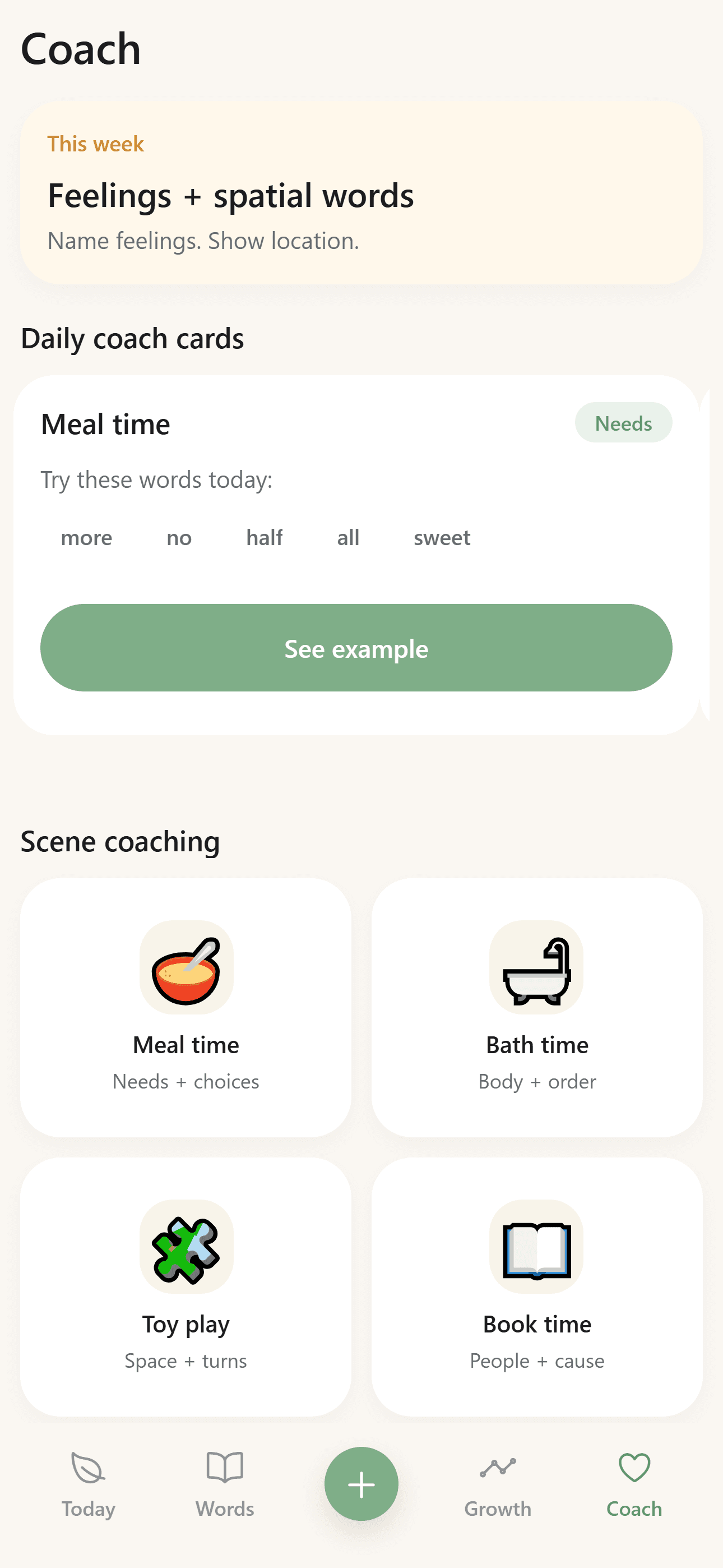
Meal Time: Choices and Requests
Meals naturally include names, actions, preferences, and social words. A parent might model simple choices such as water or milk, more or all done, hot or cool.
Leave space for a response without demanding a repetition. A point, look, gesture, sound, or word can all be part of the interaction. If a new expression appears, record the real phrase and tag the meal scene.
The app's goal is to preserve the observation, not to evaluate nutrition, feeding safety, or development.
Bath Time: Actions and Order
Bath time repeats a clear sequence: turn on water, wash, scrub, rinse, dry, and put things away. Repetition makes action words easier to use naturally.
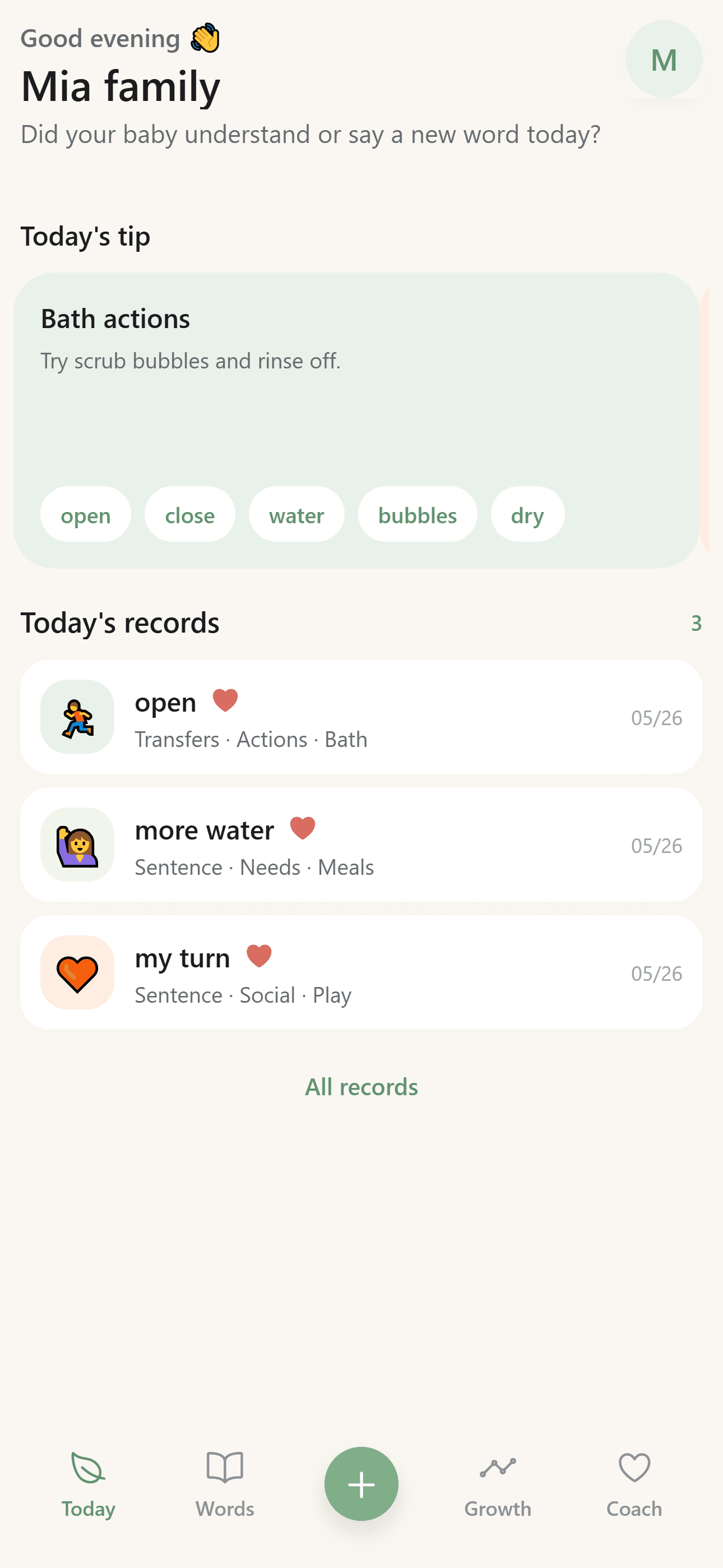
Describe what is happening in short language. "Water on," "wash hands," or "towel dry" connects words to visible actions. If a child begins using one of those words in another setting, the scene note can help you remember that change.
Book Time: People, Objects, and Questions
Books create a slower moment for naming and pointing. Instead of testing every picture, follow what attracts the child's attention. Comment on a person, object, action, or feeling, and ask an occasional open question when it fits.
The useful record may be a new label, a repeated line, or a question such as "where go?" Save the expression as it occurred rather than correcting it inside the journal.
Toy Play: Position and Turn Taking
Play introduces spatial and social language: in, out, up, down, under, my turn, your turn, again, stop, and help.
Parents can model one or two expressions that match the action already happening. This keeps conversation connected to play instead of interrupting it with a lesson.
BabyTracker can categorize the resulting records by position, actions, social words, feelings, and other groups. Over time, the category view shows what you happened to record most often.
Outdoors and Bedtime: Notice What Changes
Outdoor time offers movement, sounds, weather, vehicles, animals, and people. Bedtime brings familiar objects, sequence words, comfort language, and repeated stories.
Different scenes may bring out different expressions. A scene label is useful because it answers "where did this happen?" without requiring a long note.
If the same word begins to appear across several routines, you can update the record or note the new context. That can be a satisfying family memory without turning it into a formal measure.
Use Prompts as Ideas, Not Instructions
Coaching cards in BabyTracker suggest everyday themes such as meal time, bath time, toy play, books, feelings, and position words. They are conversation starters for parents.
They are not individualized therapy, medical advice, developmental screening, or a guarantee of a learning result. Skip any prompt that does not fit the child, language, culture, or current routine.
Keep the Journal Light
After a routine, record only the moments you want to keep. A word, stage, scene, and optional note are enough. Weekly review can happen later; the conversation itself should remain the main event.
The Short Version
Everyday routines already contain useful language. Notice a few words that match the moment, allow the interaction to stay natural, and record memorable expressions without testing or ranking.
BabyTracker connects scene-based ideas with a local first-words journal, helping parents remember what happened during real family life.